

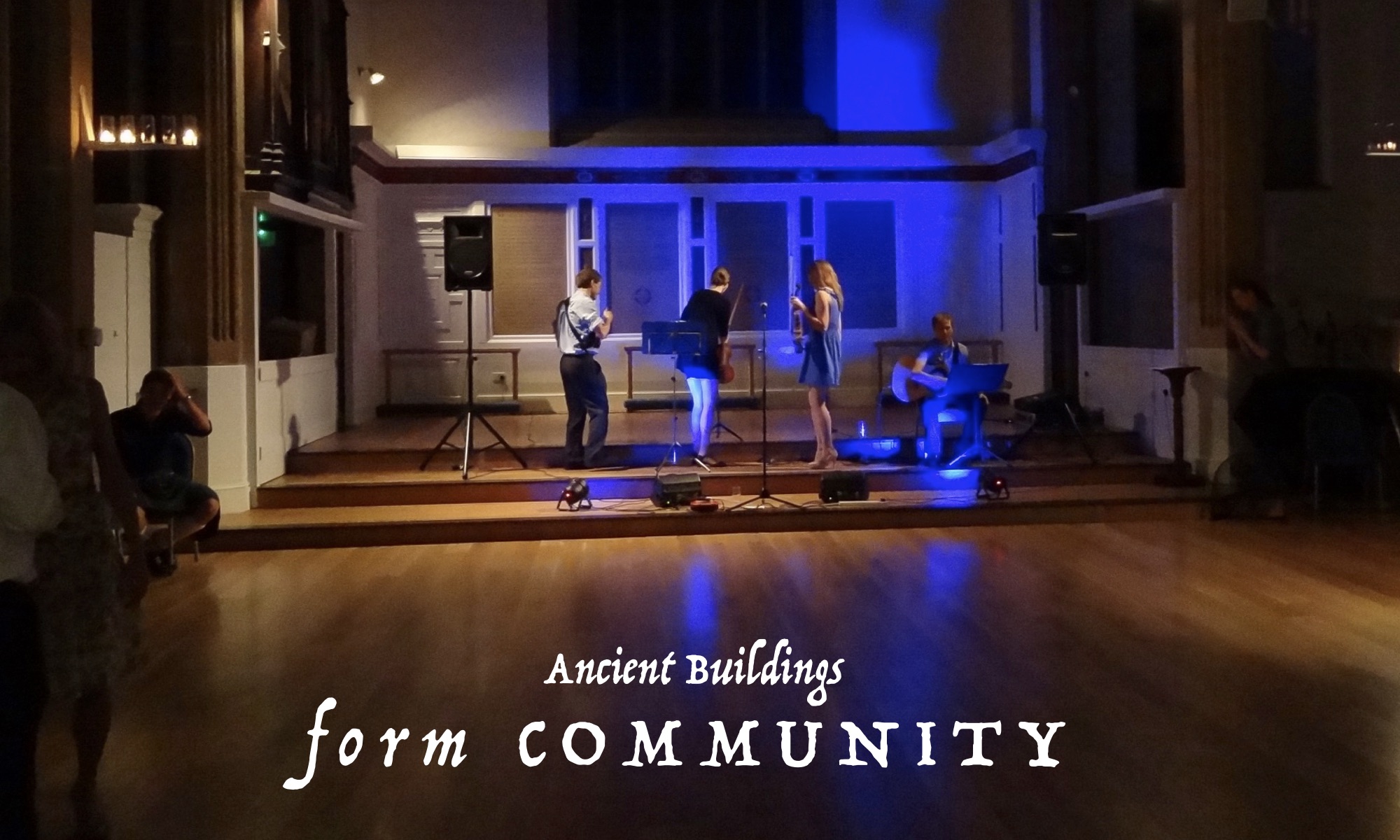
Of critical importance to the health of ancient buildings is their relationship with the local communities which created them, and which they continue to co-create. The relationship is reciprocal, the feeling mutual.
Culture starts with the most local forms of community, and works from the bottom up. Culture ‘dwells’, is always from somewhere. Living buildings make this dwelling manifest; they are owned by their community, and are convivial.
By contrast, high culture is by instinct ‘contravivial.’ It defines a canon, invests in a collection, and then defends against change through preservation. Dealing in universals, it controls from above, marginalising the local and communal.
The resulting democratic deficit is not resolved by introducing intangible as distinct from tangible forms of heritage, which offer no account for the ‘co-dwelling’ of people and buildings. Adding the communal to a significance of discrete values cannot resurrect the life of a heritage once it has been embalmed; preservation by any other name would smell as sick.
SCARAB stands for the continuity and renewal of living buildings. It promotes a balanced heritage of past, present and future that integrates the communal with the aesthetic and historical. It favours localism over nationalism, continuity over separation, movement over stasis and celebration over the ‘contravivial’.